Marcin Wichary
1 February–27 March 2026 / 56 books
UX books not written by white men
This list of UX books has been crowdsourced from Mastodon and Bluesky. Thank you for everyone who participated and to my friend Scott Jenson for helping prepare this list. Note: All the descriptions below come from the respective Book websites or publishers.
Interactions + User interface design
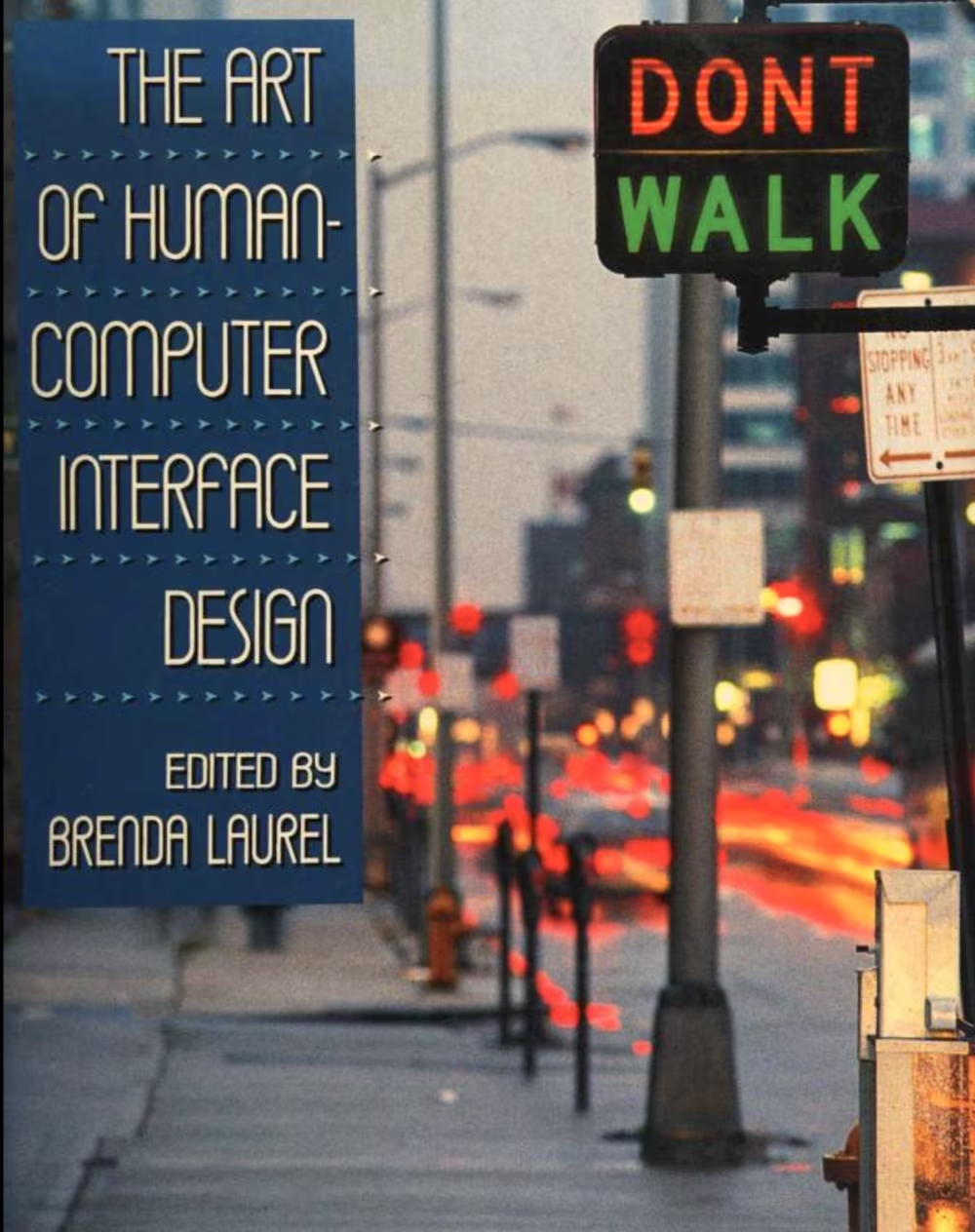
The Art of Human-Computer Interface Design
“The classic Art of Human-Computer Interface Design is one book that isn't filled with code samples but is nonetheless a thought-provoking resource for developers. The book is a collection of essays from industry luminaries such as Alan Kay, Nicholas Negroponte, and Ted Nelson. Don't expect to read it for hard-and-fast advice on solving your programming problems, but do expect to gain new perspectives on how your users view your applications and what they expect from a computer.”
Better Onboarding: Effective strategies for guiding new users through products & services
“When users try your product for the first time, what encourages them to come back? Onboarding can make the difference between abandoned accounts and devoted use—if we design it as a holistic, ongoing process. Krystal Higgins demonstrates how the best onboarding experiences guide people as they interact, helping them follow their own path to success. Gain practical strategies and techniques for designing effective guidance, whether you’re working through a redesign, launching new features, rolling out service updates, or welcoming back returning users. Set aside the tutorials, manuals, and intrusive instructions of the past, and learn how to use guided interaction to help users find their way—and get value out of every step.”

Beyond Sticky Notes: Co-design for Real: Mindsets, methods and movements
“Co-design is a transformative, community-centred design method which is much discussed – yet rarely practised authentically. Beyond Sticky Notes teaches you what co-design is and how to do it. Packed full of useful tips, clear diagrams, and practical frameworks, this book will help you lead collaborative design work, and genuinely share power. A useful book for new and experienced practitioners alike, Beyond Sticky Notes is a guide to the mindsets, methods, and movements of co-design.”
Conversational Design
“How do we make digital systems feel less robotic and more real? Whether you work with interface or visual design, front-end technology, content design, or just want to be better at your business, learn why conversation is the best model for creating device-independent, human-centered systems. Using audible speech or taking the form of a text chat isn’t enough to make an interaction truly conversational. From understanding the human interface, to effectively using the power of personality, to getting it all done, you’ll find out how the art of communication can elevate technology.”
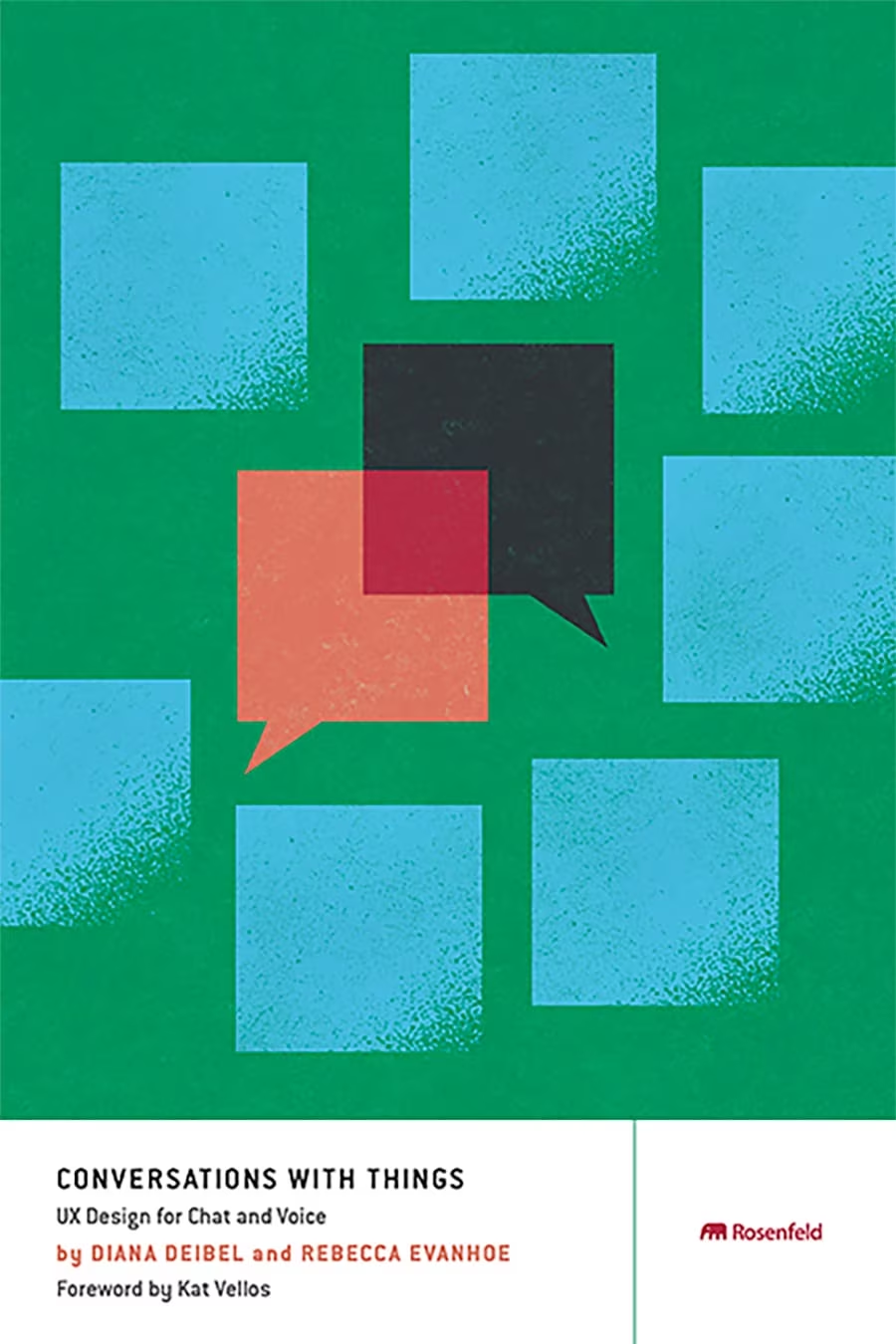
Conversations with Things: UX Design for Chat and Voice
“Welcome to the future, where you can talk with the digital things around you: voice assistants, chatbots, and more. But these interactions can be unhelpful and frustrating—sometimes even offensive or biased. Conversations with Things teaches you how to design conversations that are useful, ethical, and human-centered—because everyone deserves to be understood, especially you.”
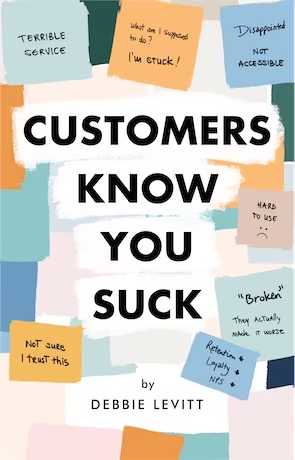
Customers Know You Suck: Actionable CX Strategies to Better Understand, Attract, and Retain Customers
“Customers Know You Suck is the how-to manual for customer-centric product-market fit. Its highly actionable models, maps, and processes empower everyone to improve the Customer Experience (CX). Learn how to investigate, diagnose, and act on what’s blocking teams. Gather the evidence and data that better inform decisions, leading to increased satisfaction, conversion, and loyalty. Use our governance model for implementing and monitoring the progress, success, and failure of internal process changes and experiments.”
Designing for the Digital Age: How to Create Human-Centered Products and Services
“Designing successful products and services in the digital age requires a multi-disciplinary team with expertise in interaction design, visual design, industrial design, and other disciplines. It also takes the ability to come up with the big ideas that make a desirable product or service, as well as the skill and perseverance to execute on the thousand small ideas that get your design into the hands of users. It requires expertise in project management, user research, and consensus-building. This comprehensive, full-color volume addresses all of these and more with detailed how-to information, real-life examples, and exercises. Topics include assembling a design team, planning and conducting user research, analyzing your data and turning it into personas, using scenarios to drive requirements definition and design, collaborating in design meetings, evaluating and iterating your design, and documenting finished design in a way that works for engineers and stakeholders alike.”
Paper Prototyping
“Do you spend a lot of time during the design process wondering what users really need? Do you hate those endless meetings where you argue how the interface should work? Have you ever developed something that later had to be completely redesigned? Paper Prototyping can help. Written by a usability engineer with a long and successful paper prototyping history, this book is a practical, how-to guide that will prepare you to create and test paper prototypes of all kinds of user interfaces. You'll see how to simulate various kinds of interface elements and interactions. You'll learn about the practical aspects of paper prototyping, such as deciding when the technique is appropriate, scheduling the activities, and handling the skepticism of others in your organization. Numerous case studies and images throughout the book show you real world examples of paper prototyping at work.”
Information architecture + Systems thinking
The Accidental Taxonomist
“The Accidental Taxonomist is the most comprehensive guide available to the art and science of building information taxonomies. Heather Hedden—a leading taxonomy expert and instructor—walks readers through the process, displaying her trademark ability to present highly technical information in straightforward, comprehensible English.”

Closing the Loop: Systems Thinking for Designers
“As design continues to impact our products, services, and solutions at scale, it is more important than ever to understand the systems and context that surround design decisions. Closing the Loop will help you make the invisible visible. It will introduce you to a powerful systems thinking mindset, and provide you with the tools and frameworks to define the systems that surround your work.”
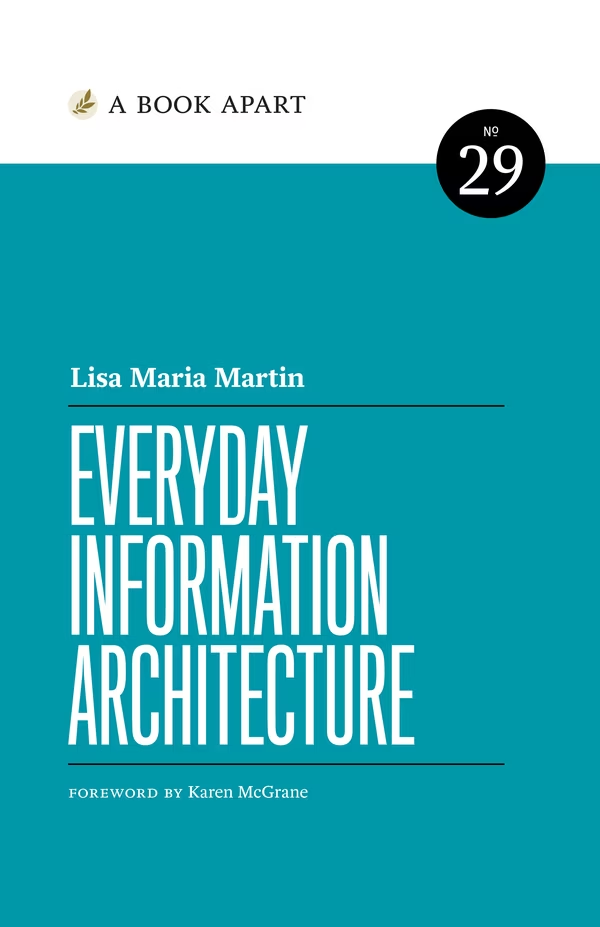
Everyday Information Architecture
“The design of information on the web changes the way people find, understand, and use that information—for better or for worse. Lisa Maria Marquis shows you how to leverage the principles and practices of information architecture in order to craft more thoughtful and effective digital spaces. Learn how to analyze your site’s content and structure, build clear and consistent taxonomies, and develop more strategic sitemaps. Because when we’re intentional about how we organize web content, we create better experiences for everyone.”
How to Make Sense of Any Mess
“Everyone has a mess in their life they need to make sense of. As an information architect, I see everything getting more complex. I believe the world is going to need a new wave of sensemakers who are prepared for the information-based challenges that lay ahead. I wrote this book because I believe that information architecture is the right framing of theory and practice to prepare someone to make sense of the kinds of gnarly and complex challenges like the ones faced today by designers, product managers, researchers, writers, teachers … and the list of sensemaking-fueled jobs goes on.”

Sorting Things Out: Classification and Its Consequences
“In Sorting Things Out, Geoffrey C. Bowker and Susan Leigh Star explore the role of categories and standards in shaping the modern world. In a clear and lively style, they investigate a variety of classification systems, including the International Classification of Diseases, the Nursing Interventions Classification, race classification under apartheid in South Africa, and the classification of viruses and of tuberculosis.”
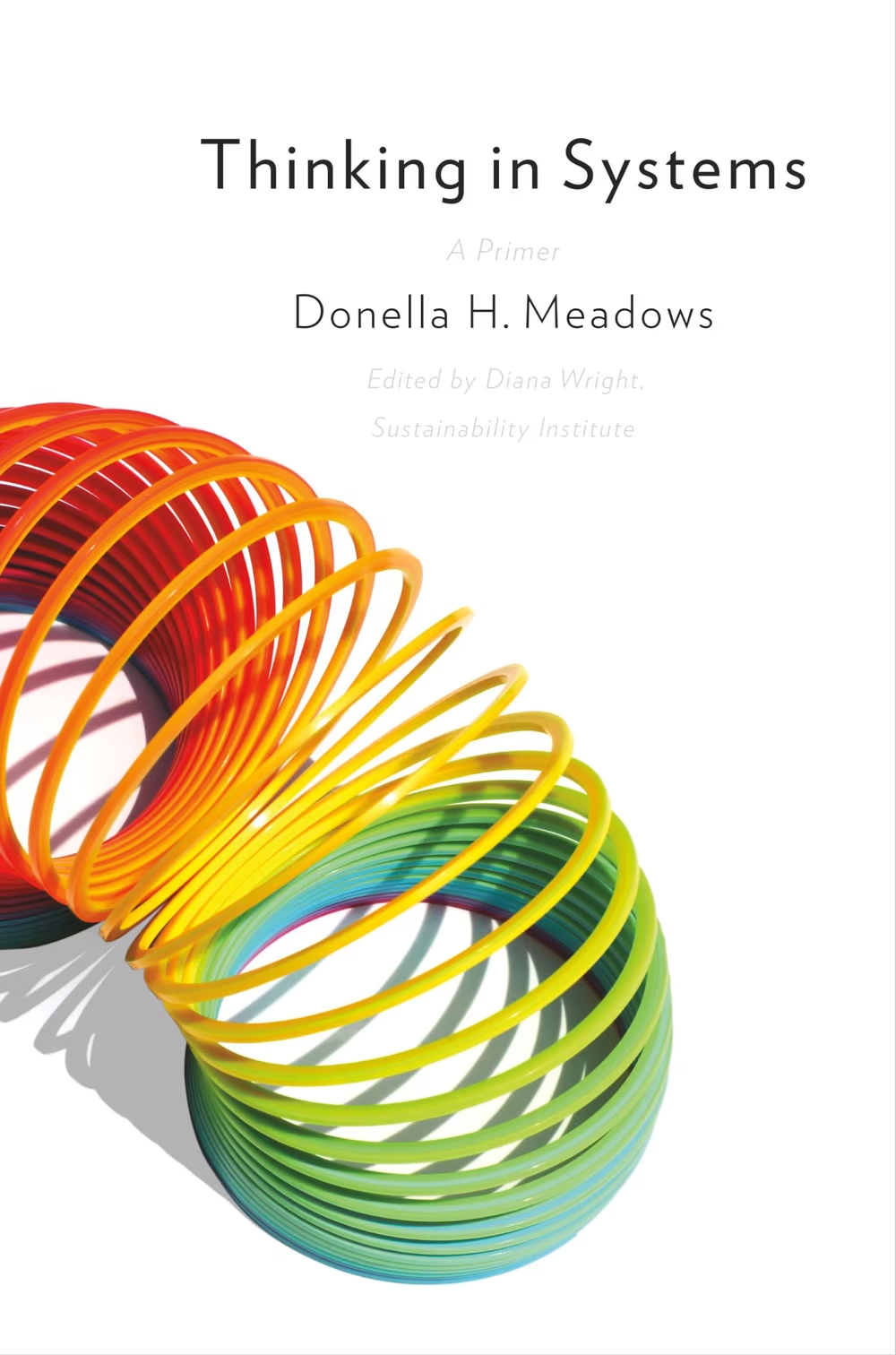
Thinking in Systems
“Thinking in Systems is a concise and crucial book offering insight for problem solving on scales ranging from the personal to the global. Edited by the Sustainability Institute’s Diana Wright, this essential primer brings systems thinking out of the realm of computers and equations and into the tangible world, showing readers how to develop the systems-thinking skills that thought leaders across the globe consider critical for 21st-century life.”
Research + Behavior
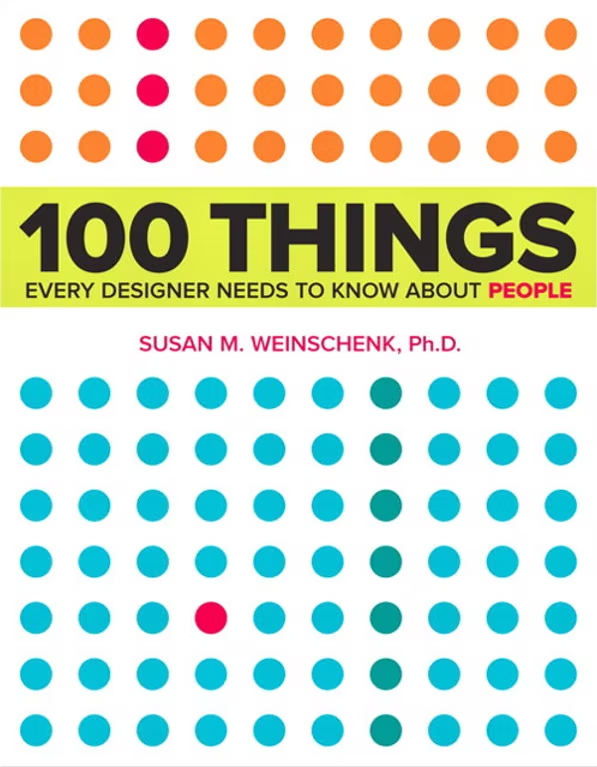
100 Things Every Designer Needs To Know About People
“If you want to design intuitive and engaging web sites, apps, print materials or products, then you need to know the psychology that underlies people's behavior. 100 Things Every Designer Needs to Know About People explores both the foundational and the latest research in the psychology of the conscious mind and applies it to design. What grabs and holds attention on a page or screen? What is more important, peripheral vision or central vision? How much information is too much at one time? How do you motivate people to continue on to the next step? What line length should you use if you want people to read text on or offline? What about color? Imagery? Does font type really matter? These are just a few of the questions that the book answers. This book is not just a set of guidelines, but a deep dive into what makes people tick. Dr. Weinschenk shares the psychology research and shows lots of examples so that you can design intuitive and engaging print, web, applications and products that match the way people think, work, and play.”

Accessible UX Research
“The book isn’t a checklist for you to complete as a part of your accessibility work. It’s a practical guide to inclusive UX research, from start to finish. If you’ve ever felt unsure how to include disabled participants, or worried about “getting it wrong,” this book is for you. You’ll get clear, practical strategies to make your research more inclusive, effective, and reliable. […] The book also challenges common assumptions about disability and urges readers to rethink what inclusion really means in UX research and beyond. Let’s move beyond compliance and start doing research that reflects the full diversity of your users. Whether you’re in industry or academia, this book gives you the tools — and the mindset — to make it happen.”
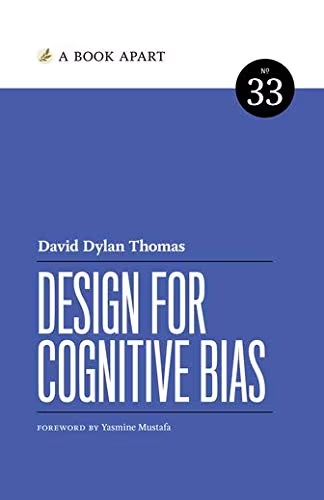
Design for Cognitive Bias
“We humans are messy, illogical creatures who like to imagine we’re in control—but we blithely let our biases lead us astray. In Design for Cognitive Bias, David Dylan Thomas lays bare the irrational forces that shape our everyday decisions and, inevitably, inform the experiences we craft. Once we grasp the logic powering these forces, we stand a fighting chance of confronting them, tempering them, and even harnessing them for good. Come along on a whirlwind tour of the cognitive biases that encroach on our lives and our work, and learn to start designing more consciously.”
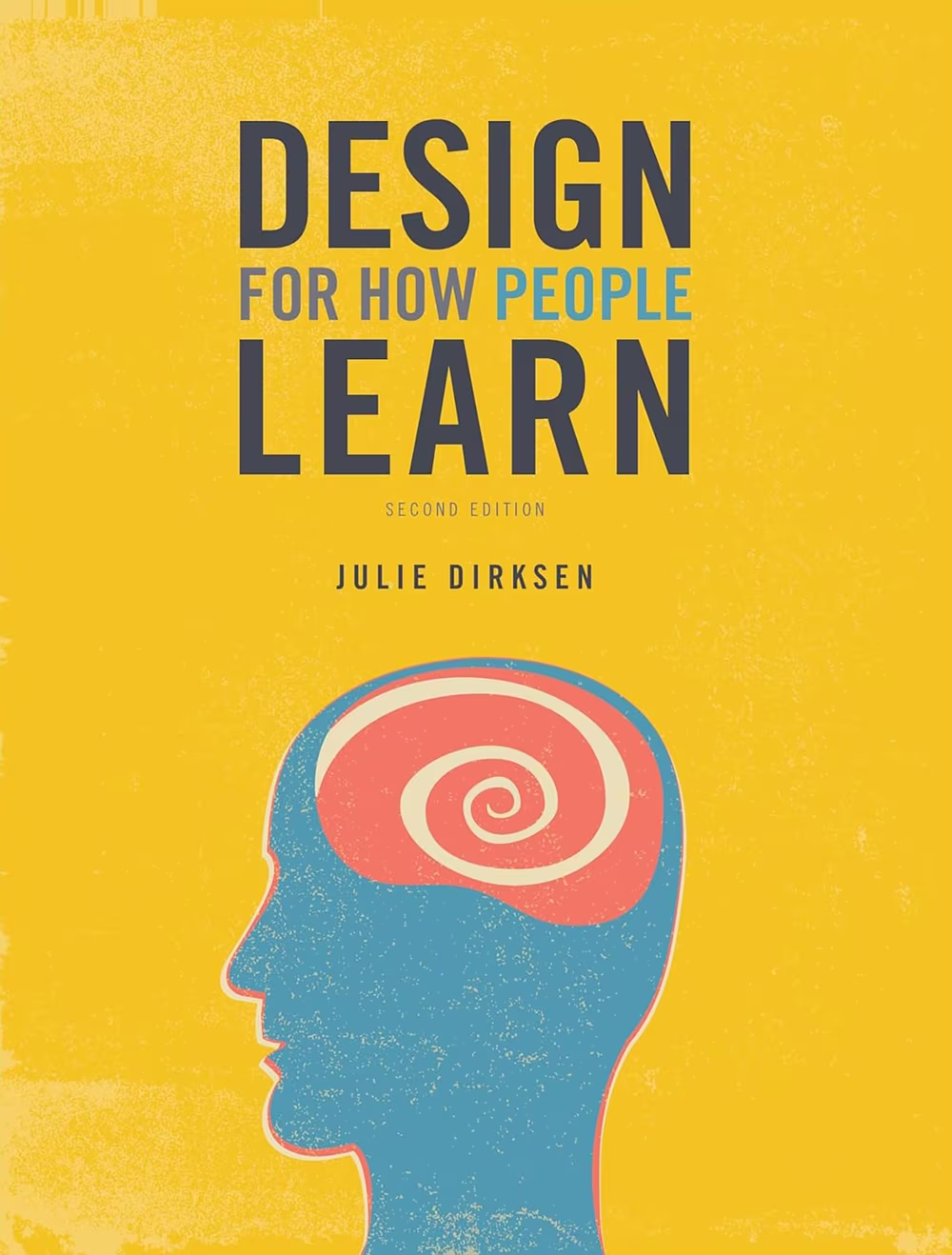
Design for How People Learn
“In Design For How People Learn, Second Edition, you’ll discover how to use the key principles behind learning, memory, and attention to create materials that enable your audience to both gain and retain the knowledge and skills you’re sharing. Updated to cover new insights and research into how we learn and remember, this new edition includes new techniques for using social media for learning as well as two brand new chapters on designing for habit and best practices for evaluating learning, such as how and when to use tests. Using accessible visual metaphors and concrete methods and examples, Design For How People Learn, Second Edition will teach you how to leverage the fundamental concepts of instructional design both to improve your own learning and to engage your audience.”

How Artifacts Afford: The Power and Politics of Everyday Things
“Technological affordances mediate between the features of a technology and the outcomes of engagement with that technology. The concept of affordances, which migrated from psychology to design with Donald Norman's influential 1988 book, The Design of Everyday Things, offers a useful analytical tool in technology studies—but, Jenny Davis argues in How Artifacts Afford, it is in need of a conceptual update. Davis provides just such an update, introducing the mechanisms and conditions framework, which offers both a vocabulary and necessary critical perspective for affordance analyses.”
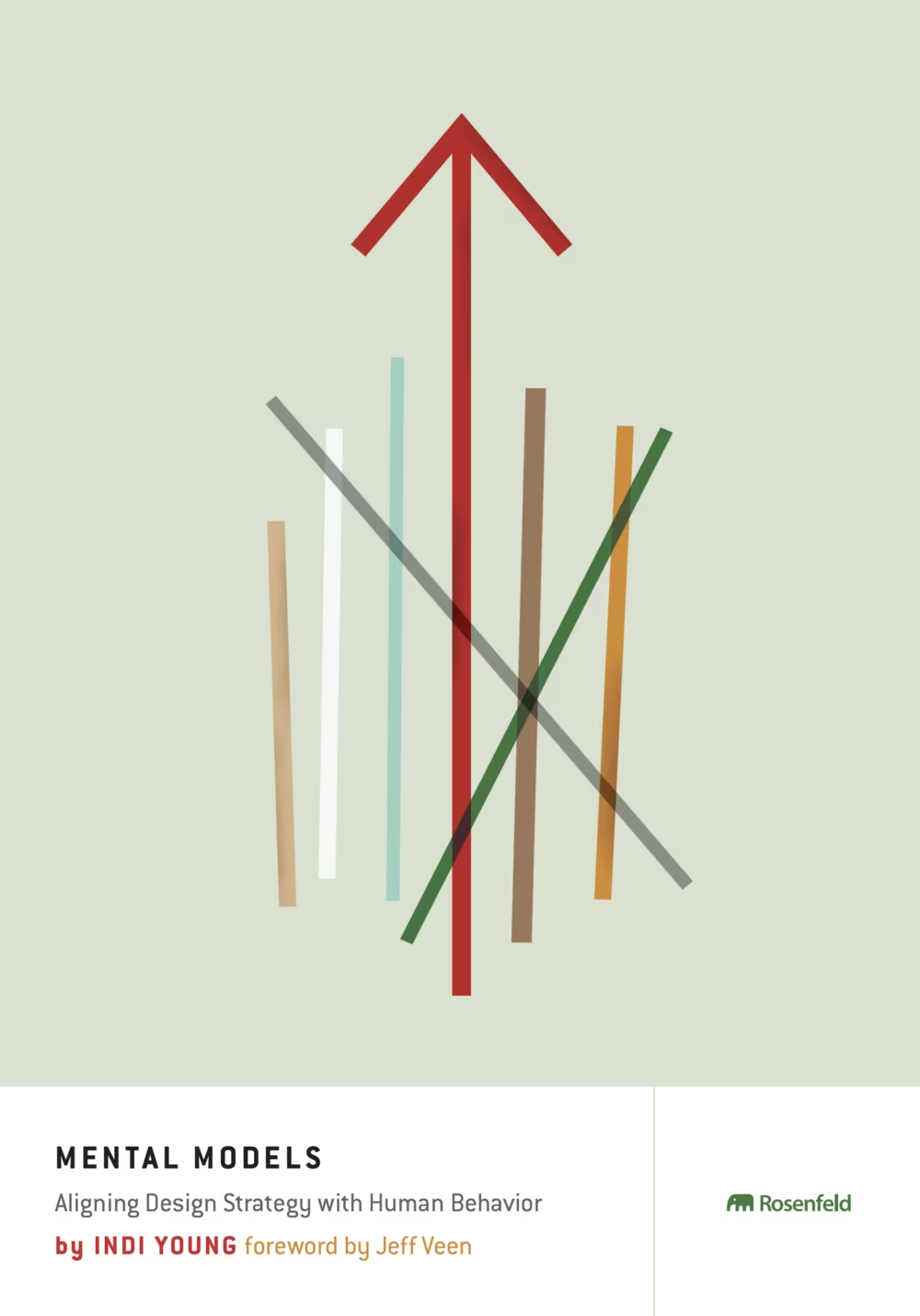
Mental Models: Aligning Design Strategy with Human Behavior
“There is no single methodology for creating the perfect product—but you can increase your odds. One of the best ways is to understand users’ reasons for doing things. Mental Models gives you the tools to help you grasp, and design for, those reasons. Adaptive Path co-founder Indi Young has written a roll-up-your-sleeves book for designers, managers, and anyone else interested in making design strategic, and successful.”

The Moderator’s Survival Guide
“Ever wondered what to do when something unexpected or tricky happens while you’re running a user research study? The Moderator’s Survival Guide by Donna Tedesco and Fiona Tranquada is an essential tool for successfully handling those situations.”
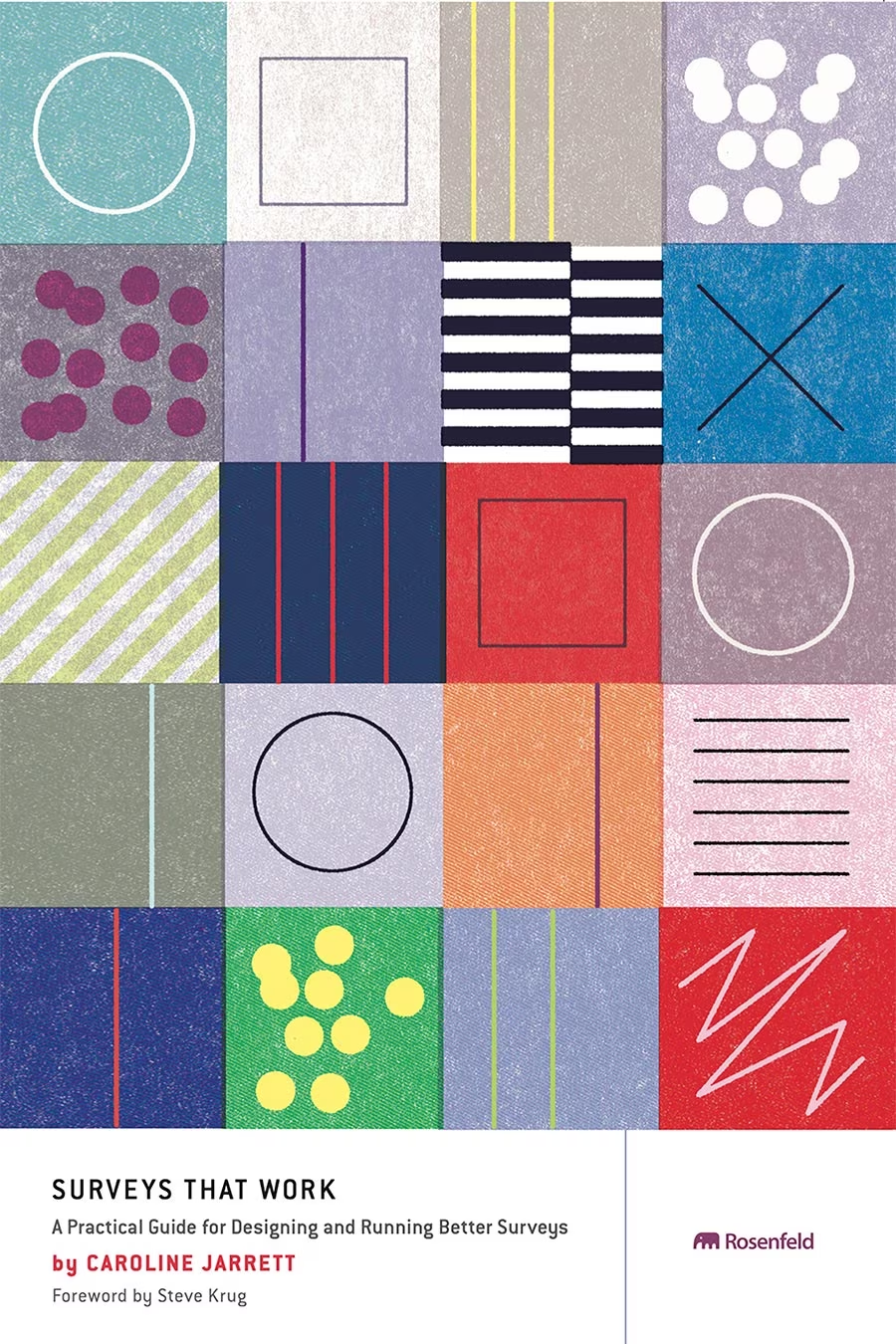
Surveys That Work: A Practical Guide for Designing and Running Better Surveys
“Surveys That Work explains a seven-step process for designing, running, and reporting on a survey that gets accurate results. In a no-nonsense style with plenty of examples about real-world compromises, the book focuses on reducing the errors that make up Total Survey Error—a key concept in survey methodology. If you are conducting a survey, this book is a must-have.”
Time to Listen: How Giving People Space to Speak Drives Invention and Inclusion
“Product design strategy often seeks first to grow the number of users, and to steer them in ways that benefit the organization. This mindset has driven our organizations into a corner, focused on improving the product. Even when product design teams want to benefit people, they often discover they've harmed people instead by neglecting the diversity of approaches and thinking. In this book, world-class researcher Indi Young teaches you how to listen deeply to help your organization move away from a product-focused strategy toward a measurable strategy centered on people and their purpose.”
Turing-Complete User: Resisting Alienation in Human Computer Interaction
“Around 2010, the field of human-computer interaction and the IT industry at large started to invest in reforming their terminology: banning some words and reversing the meanings of others to camouflage the widening gap between users and developers, to smooth the transition from personal computers to “dumb terminals”, from servers to “buckets”, from double-clicking to saying “OK, Google”. Computer users also learnt to talk, loud and clear, to be understood by Siri, Alexa, Google Glass, HoloLens, and other products that perform both listening and answering. Maybe it is exactly this amalgamation of input and output into a “conversation” that defines the past decade, and it will be the core of HCI research in the years to come. Who is scripting the conversations with these invisible ears and mouths? How can users control their lines? When hardware and software dissolve into anthropomorphic forms and formless “experiences”, words stop being mere names and metaphors. They do not only appeal to the imagination and give shape to invisible products. Words themselves become interfaces – and every change in vocabulary matters.”
User Journey Mapping: Visualize User Research, Brainstorm Opportunities, And Solve Problems
“A user journey map is a powerful asset that's used to understand how people use our products. It is an essential tool for building websites, applications, and services. By visualizing user goals, phases in the journey, tasks, pain points, and sometimes feelings, a map can help teams build products by showing a global view of the user's journey, bringing stakeholders and product teams together. It can be used to brainstorm new opportunities, fix issues, design new services, and understand gaps within an organization. This book will show you how to research, present, and use a user journey map.”
The User’s Journey: Storymapping Products That People Love
“Like a good story, successful design is a series of engaging moments structured over time. The User’s Journey will show you how, when, and why to use narrative structure, technique, and principles to ideate, craft, and test a cohesive vision for an engaging outcome. See how a “story first” approach can transform your product, feature, landing page, flow, campaign, content, or product strategy.”
UX writing + Content strategy
Content Strategy for Mobile
“You don’t get to decide which platform or device your customers use to access your content: they do. Mobile isn’t just smartphones, and it doesn’t necessarily mean you are on the move. It’s a proliferation of devices, platforms, and screensizes — from the tiniest “dumb” phones to the desktop web. How can you be sure that your content will work everywhere, all the time? Karen McGrane will teach you everything you need to get your content onto mobile devices (and more). You’ll first gather data to help you make the case for a mobile strategy, then learn how to publish flexibly to multiple channels. Along the way, you'll get valuable advice on adapting your workflow to a world of emerging devices, platforms, screen sizes, and resolutions. And all in the less time than it takes you to fly from New York to Chicago.”

Letting Go of the Words: Writing Web Content that Works
“Letting Go of the Words, 2nd edition, is about creating great content for websites, mobile apps, and social media by thinking of content as conversation. In Letting Go of the Words, you’ll find lots of easy-to-read guidelines for having great online conversations with your site visitors. The 2nd edition of Letting Go of the Words offers strategy, process, and tactics for creating or revising content for websites and apps. It helps you plan, organize, design, write, revise, and test content that will make your site visitors come back again and again.”
Microcopy: Discover How Tiny Bits of Text Make Tasty Apps and Websites
“Microcopy consists of small pieces of text like headings, hint texts, placeholders, summaries, and instructions throughout a website or app. These little bits of content often get overlooked to the detriment of the application or website you’re building, which is tragic since they make the difference between products that fade into obscurity and those that go on to become extremely successful.”
Strategic Writing for UX
“When you depend on users to perform specific actions—like buying tickets, playing a game, or riding public transit—well-placed words are most effective. But how do you choose the right words? And how do you know if they work? With this practical book, you’ll learn how to write strategically for UX, using tools to build foundational pieces for UI text and UX voice strategy. UX content strategist Torrey Podmajersky provides strategies for converting, engaging, supporting, and re-attracting users. You’ll use frameworks and patterns for content, methods to measure the content’s effectiveness, and processes to create the collaboration necessary for success. You’ll also structure your voice throughout so that the brand is easily recognizable to its audience.”
Foundations + Strategy
Badass: Making Users Awesome
“Imagine you’re in a game with one objective: a bestselling product or service. The rules? No marketing budget, no PR stunts, and it must be sustainably successful. No short-term fads. This is not a game of chance. It is a game of skill and strategy. And it begins with a single question: given competing products of equal pricing, promotion, and perceived quality, why does one outsell the others?”

Computers As Theatre
“Presents a new theory of human-computer activity. Building on Aristotle's analysis of the form and structure of drama, Laurel shows how similiar principles can help us understand what people experience when interfacing with computers.”
Continuous Discovery Habits: Discover Products that Create Customer Value and Business Value
“How do you know that you are making a product or service that your customers want? How do you ensure that you are improving it over time? How do you guarantee that your team is creating value for your customers in a way that creates value for your business? In this book, you'll learn a structured and sustainable approach to continuous discovery that will help you answer each of these questions, giving you the confidence to act while also preparing you to be wrong. You'll learn to balance action with doubt so that you can get started without being blindsided by what you don't get right.”
Just Enough Research
“Most design and business decisions are based on some combination of personal preferences, fear, and wishful thinking instead of sound evidence. Most design research is ineffective because it isn’t asking or answering the right questions. Just Enough Research is here to help.”

Nonlinear: Navigating Design with Curiosity and Conviction
“In Nonlinear, Kevin Bethune shows us that we can reject trodden paths of digital or physical product creation by taking advantage of a nonlinear approach. To unlock meaningful innovation that breeds new and novel outcomes, he writes, teams need to embark on a journey into the proverbial forest of ambiguity, the result of a rapidly converging, dynamic, and exponentially changing landscape. The journey is less about getting it right or wrong, and more about using the information we have at our disposal to understand our choices and unlock new learning.”
Plans and Situated Actions: The Problem of Human-Machine Communication
“This lively and original book offers a provocative critique of the dominant assumptions regarding human action and communication which underlie recent research in machine intelligence. Lucy Suchman argues that the planning model of interaction favoured by the majority of AI researchers does not take sufficient account of the situatedness of most human social behaviour. The problems that can arise as a result are pertinently, and often amusingly, illustrated by the careful analysis of a recorded interaction between novice users and an intelligent machine, whose design has failed to accommodate essential resources of successful human communication. Plans and Situated Actions presents a compelling case for the re-examination of current models underlying interface design. Lucy Suchman's proposals for a fresh characterisation of human-computer interaction which also incorporates recent insights from the social sciences provides a challenge that everyone interested in machine intelligence will seriously need to consider.”

The Staff Designer: Grow, Influence, and Lead as an Individual Contributor
“Staff design is a combination of team leadership and in-the-pixels design work, all without any direct people management. There are tons of management books, but very little help for senior designers who want to keep working with the pixels. Fret not: this handbook will guide you to success — whether you’re already navigating a Staff Design role, or you’re an Independent Contributor deciding whether or not to embark on the journey. You’ll learn methods to build influence as an individual contributor, improve your executive communication, and impact strategy at scale.”
The User Experience Team of One: A Research and Design Survival Guide
“Whether you’re new to UX or a seasoned practitioner, The User Experience Team of One gives you everything you need to succeed, emphasizing down-to-earth approaches that deliver big impact over time-consuming, needlessly complex techniques. This updated classic remains a comprehensive and essential guide for UX and product designers everywhere—you’ll accomplish a lot more with a lot less.”
Accessibility + Inclusion
Accessibility for Everyone
“You make the web more inclusive for everyone, everywhere, when you design with accessibility in mind. Let Laura Kalbag guide you through the accessibility landscape: understand disability and impairment challenges; get a handle on important laws and guidelines; and learn how to plan for, evaluate, and test accessible design. Leverage tools and techniques like clear copywriting, well-structured IA (Information Architecture), meaningful HTML, and thoughtful design, to create a solid set of best practices. Whether you’re new to the field or a seasoned pro, get sure footing on the path to designing with accessibility.”
Cross-Cultural Design
“The modern web is inherently global—and if we want to design successfully for it, we must be ready to meet the needs, perspectives, and expectations of multifaceted, multicultural audiences. With utmost timeliness, Senongo Akpem shares a clear and accessible methodology for designing across cultures: from performing socially-conscious research, to building culturally responsive experiences, to developing meaningful internationalization and localization approaches. Expand your craft, and your mindset—and start creating a richer experience for everyone on the web, regardless of location, language, or identity.”
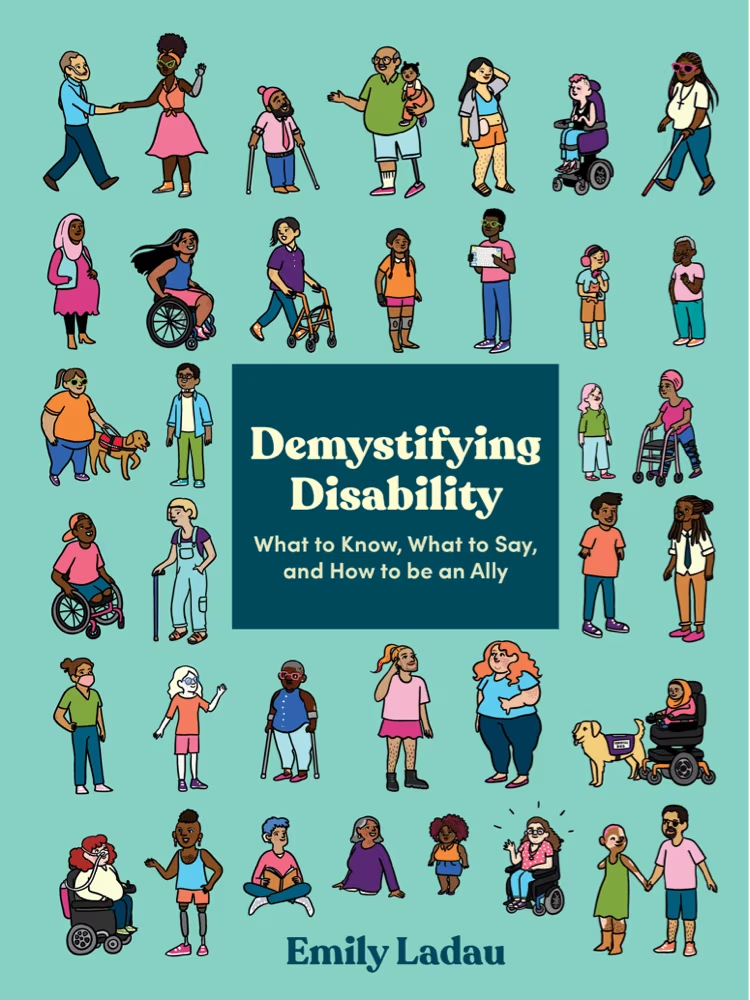
Demystifying Disability: What to Know, What to Say, and How to be an Ally
“An approachable guide to being a thoughtful, informed ally to disabled people, with actionable steps for what to say and do (and what not to do) and how you can help make the world a more accessible, inclusive place.”
Design Justice
“An exploration of how design might be led by marginalized communities, dismantle structural inequality, and advance collective liberation and ecological survival.”
In Through the Side Door: Fifty Years of Women in Interaction Design
“Framed against the backdrop of contemporary waves of feminism and the history of computing design, In through the Side Door foregrounds the stories of the women working in the field of computing and the emergent discipline of interaction design as the graphical user interface was developed. Erin Malone begins with a handful of pioneers who brought to the field various methods from a variety of backgrounds including design, technical communication, social psychology, ethnography, information science, and mechanical engineering. Moving into the early days of desktop computing, the book highlights the women on the teams inventing contemporary desktop computer interfaces and related tools, including those at Xerox PARC, Apple's Human Interface Group, and Microsoft.”
Giving a Damn About Accessibility
“I wrote the accessibility book I needed 17 years ago when I made my career shift to focus on disability and accessibility.”
Mismatch: How Inclusion Shapes Design
“Sometimes designed objects reject their users: a computer mouse that doesn't work for left-handed people, for example, or a touchscreen payment system that only works for people who read English phrases, have 20/20 vision, and use a credit card. Something as simple as color choices can render a product unusable for millions. These mismatches are the building blocks of exclusion. In Mismatch, Kat Holmes describes how design can lead to exclusion, and how design can also remedy exclusion. Inclusive design methods—designing objects with rather than for excluded users—can create elegant solutions that work well and benefit all.”
UX-adjacent

Advancing Ethnography in Corporate Environments
“In this innovative volume, twelve leading scholars from corporate research labs and independent consultancies tackle the most fundamental and contentious issues in corporate ethnography. Organized in pairs of chapters in which two experts consider different sides of an important topic, these provocative encounters go beyond stale rehearsals of method and theory to explore the entanglements that practitioners wrestle with on a daily basis. The discussions are situated within the broader universe of ethnographic method and theory, as well as grounded in the practical realities of using ethnography to solve problems in the business world. The book represents important advances in the field and is ideal for students and scholars as well as for corporate practitioners and decision makers.”
Artificial Intelligence: A Guide for Thinking Humans
“In Artificial Intelligence, Mitchell turns to the most urgent questions concerning AI today: How intelligent—really—are the best AI programs? How do they work? What can they actually do, and when do they fail? How humanlike do we expect them to become, and how soon do we need to worry about them surpassing us? Along the way, she introduces the dominant models of modern AI and machine learning, describing cutting-edge AI programs, their human inventors, and the historical lines of thought underpinning recent achievements. She meets with fellow experts such as Douglas Hofstadter, the cognitive scientist and Pulitzer Prize–winning author of the modern classic Gödel, Escher, Bach, who explains why he is “terrified” about the future of AI. She explores the profound disconnect between the hype and the actual achievements in AI, providing a clear sense of what the field has accomplished and how much further it has to go.”

Be Slightly Evil: A Playbook for Sociopaths
“In 2010, Venkatesh Rao, author of the widely read ribbonfarm.com blog, began writing an email newsletter called "Be Slightly Evil" on the timeless theme of power and influence dynamics in the world of work. By the time the list was retired in 2013, it had over 2200 readers and was growing steadily. This ebook is a carefully sequenced and edited compilation of the archives, with a 5000-word bonus essay, "Inside the Tempo," which serves as a capstone conclusion to the series.”
Deliberate Intervention: Using Policy and Design to Blunt the Harms of New Technology
“«Do no harm» is Alex Schmidt’s mantra throughout Deliberate Intervention—a book that delves into how policy and design can work together to prevent harms in technology. Using the journalistic approach she employed as an NPR reporter, Schmidt studies the history of policy making, its biases, and its evolution in the changing technology field. The beginning of each chapter highlights a graphic showing the transformation of policy and design, drawn by well-known illustrator, MJ Broadbent.”

Extra Bold: A Feminist, Inclusive, Anti-racist, Nonbinary Field Guide for Graphic Designers
“Extra Bold is the inclusive, practical, and informative (design) career guide for everyone! Part textbook and part comic book, zine, manifesto, survival guide, and self-help manual, Extra Bold is filled with stories and ideas that don't show up in other career books or design overviews.”
Information Ecologies: Using Technology with Heart
“The common rhetoric about technology falls into two extreme categories: uncritical acceptance or blanket rejection. Claiming a middle ground, Bonnie Nardi and Vicki O'Day call for responsible, informed engagement with technology in local settings, which they call information ecologies. An information ecology is a system of people, practices, technologies, and values in a local environment. Nardi and O'Day encourage the reader to become more aware of the ways people and technology are interrelated. They draw on their empirical research in offices, libraries, schools, and hospitals to show how people can engage their own values and commitments while using technology.”
The Invention of Design: A Twentieth-Century History
“In The Invention of Design, designer and historian Maggie Gram investigates how, over the twentieth century, our economic hopes, fears, and fantasies shaped the idea of “design”—then repeatedly redefined it. Nearly a century ago, resistance to New Deal–era government intervention helped transform design from an idea about aesthetics into one about function. And at century’s end, the dot-com crash brought us “design thinking”: the idea that design methodology can solve any problem, small or large. To this day, design captures imaginations as a tool for fixing market society’s broken parts from within, supposedly enabling us to thrive within capitalism’s sometimes violent constraints.”
It’s Complicated: The Social Lives of Networked Teens
“What is new about how teenagers communicate through services such as Facebook, Twitter, and Instagram? Do social media affect the quality of teens’ lives? In this eye-opening book, youth culture and technology expert danah boyd uncovers some of the major myths regarding teens' use of social media. She explores tropes about identity, privacy, safety, danger, and bullying. Ultimately, boyd argues that society fails young people when paternalism and protectionism hinder teenagers’ ability to become informed, thoughtful, and engaged citizens through their online interactions. Yet despite an environment of rampant fear-mongering, boyd finds that teens often find ways to engage and to develop a sense of identity.”

Programmed Inequality: How Britain Discarded Women Technologists and Lost Its Edge in Computing
“In Programmed Inequality, Mar Hicks explores the story of labor feminization and gendered technocracy that undercut British efforts to computerize. That failure sprang from the government's systematic neglect of its largest trained technical workforce simply because they were women. Women were a hidden engine of growth in high technology from World War II to the 1960s. As computing experienced a gender flip, becoming male-identified in the 1960s and 1970s, labor problems grew into structural ones and gender discrimination caused the nation's largest computer user—the civil service and sprawling public sector—to make decisions that were disastrous for the British computer industry and the nation as a whole.”
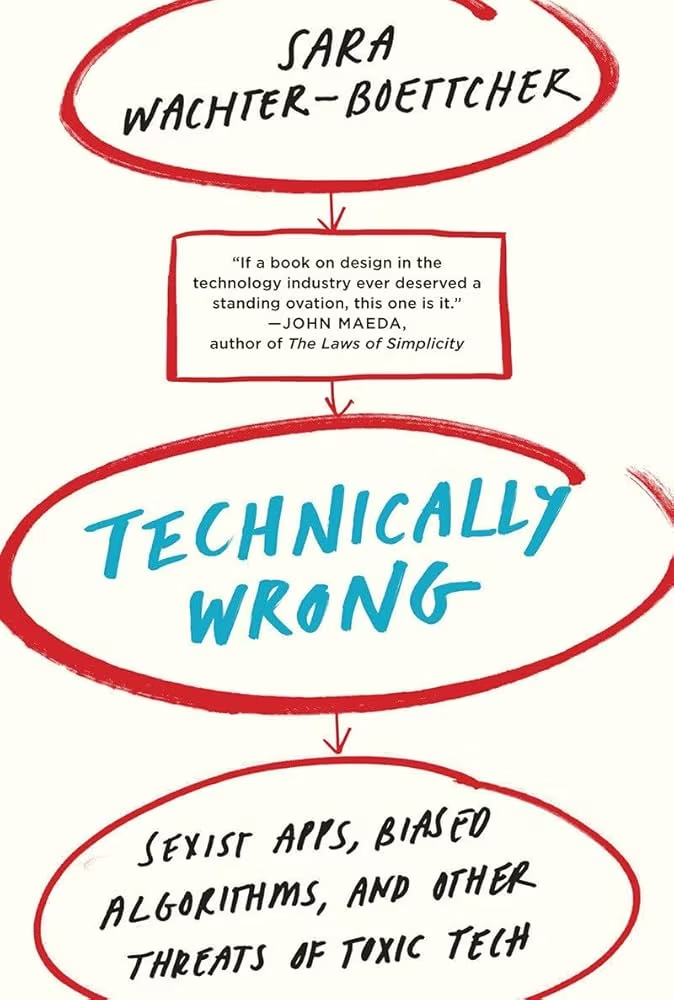
Technically Wrong: Sexist Apps, Biased Algorithms, and Other Threats of Toxic Tech
“In Technically Wrong, Sara Wachter-Boettcher demystifies the tech industry, leaving those of us on the other side of the screen better prepared to make informed choices about the services we use—and to demand more from the companies behind them.”
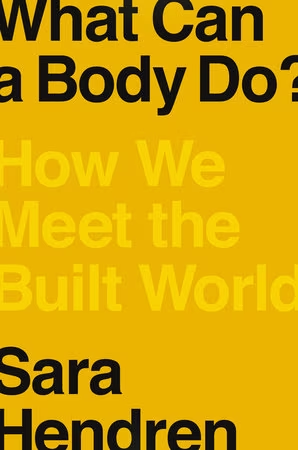
What Can a Body Do? How We Meet the Built World
“In a series of vivid stories drawn from the lived experience of disability and the ideas and innovations that have emerged from it—from cyborg arms to customizable cardboard chairs to deaf architecture—Sara Hendren invites us to rethink the things and settings we live with. What might assistance based on the body’s stunning capacity for adaptation—rather than a rigid insistence on “normalcy”—look like? Can we foster interdependent, not just independent, living? How do we creatively engineer public spaces that allow us all to navigate our common terrain? By rendering familiar objects and environments newly strange and wondrous, What Can a Body Do? helps us imagine a future that will better meet the extraordinary range of our collective needs and desires.”